Get started
Still unsure of the impact of Sonik?
See it for yourself and ask for your free trial

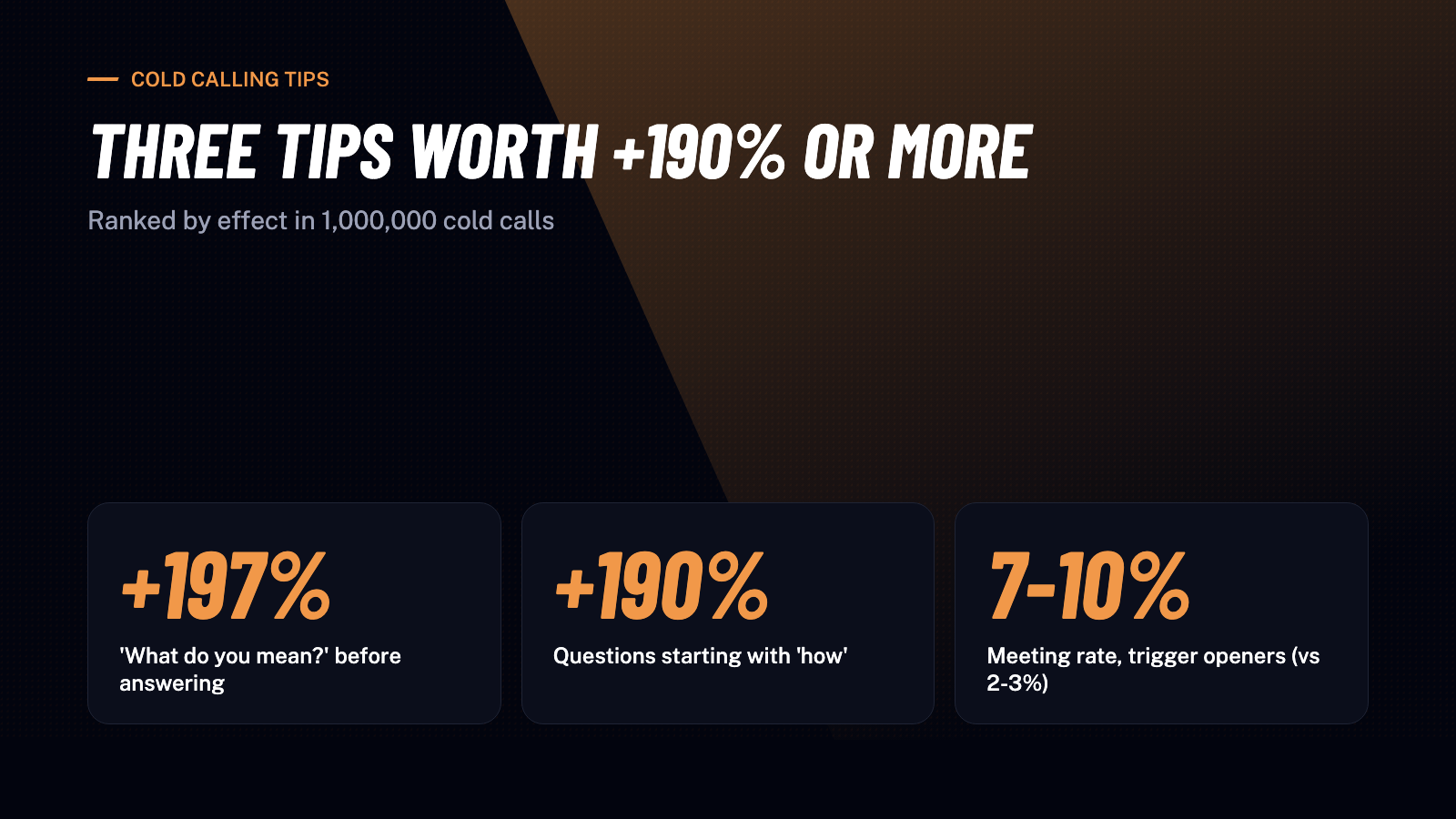
Most cold calling tips are folklore. The ones below are ranked by the size of the effect we measured in 1,000,000 B2B cold calls in France, with the five that matter most for a new seller first. If you only do the first five, you will outperform most of the reps around you.
65% of reps open by explaining their product. Trigger-based openers (a hiring post, a website visit, a job change) reach a 7-10% meeting rate against 2-3% for pitch-first openers. This is the single biggest gap in our data, and it costs nothing to fix.
+197% conversion. An objection on a cold call is usually a reflex. The question turns the reflex into a sentence you can actually answer.
+190%. "How do you handle X today?" gets a story. "Do you have a tool for X?" gets a no.
Across personas, 4pm connects at 15.8%, 10am at 14%, 8am at 9.8%. Founders pick up more around 10am, marketing around 4pm, HR around 1pm. New reps often get the 8am slot because nobody else wants it. Fight for 4pm.
"How have you been?" to a known contact reaches about 10% success, against roughly 1.5% for a cold open. Your CRM is full of them: closed-lost, dormant leads, old demo no-shows. Reps use only about 20% of the signals already in the CRM.
"You hired a Head of Sales last month, that is usually when the outbound stack gets rebuilt, that is why I am calling." One sentence links the trigger to a problem. Then stop talking.
In our experience, the calls that book meetings are the ones where the prospect talks more. If you cannot measure talk ratio yet, count the questions you asked. Fewer than three means you pitched.
A "hm, interesting" is enough. Propose two slots. Waiting to finish your pitch lets the moment cool.
"We already have a tool" is not an attack. "What do you mean, which one, and what does it not do?" is the right answer. Defending your product against a tool you have not heard named is how calls die.
"Thursday at 10 or Friday at 4?" converts because it is easy to say yes to. "Would you be open to a chat sometime?" converts because it is easy to say "sure" and never show up.
Website visitors, job changes, closed-lost deals, dormant leads, social intent. 50% of Sonik's own pipeline comes from signals that were already in the CRM. A 50-contact list with a reason per contact beats a 500-row export.
That is our north-star funnel. At an 11.3% connect rate, 20 conversations means about 180 dials. Parallel dialing gives reps about five times more conversations in the same block, which is the only realistic way to hit the number without working evenings. See how to make more calls without hiring more SDRs.
In our experience, most connects happen within the first three attempts. Three attempts across three different slots, then park the contact for a new signal.
Who are they, why now, what question. If prep takes longer, you are reading LinkedIn, not preparing. Let AI call prep do the reading.
Not the best ones. The worst ones tell you which objection you cannot handle yet and which opener gets hung up on.
"Smile while you dial." Harmless, unmeasurable. Open with a trigger instead.
"Never call on Mondays or Fridays." In our data, the slot matters far more than the day. A Friday 4pm call to a marketing lead beats a Tuesday 8am call every time.
"Research each prospect for 10 minutes." At 180 dials a day, that is 30 hours of research. The trigger is the research.
"Always ask for permission to continue." It works for some personas and some reps. It is not the lever. The trigger and the "how" question are.
We turned the tips above into defaults. Sonik's signal engine builds the daily list from website visits, job changes, closed-lost deals, dormant leads and social intent, so every call has a trigger (tips 1, 5, 11).

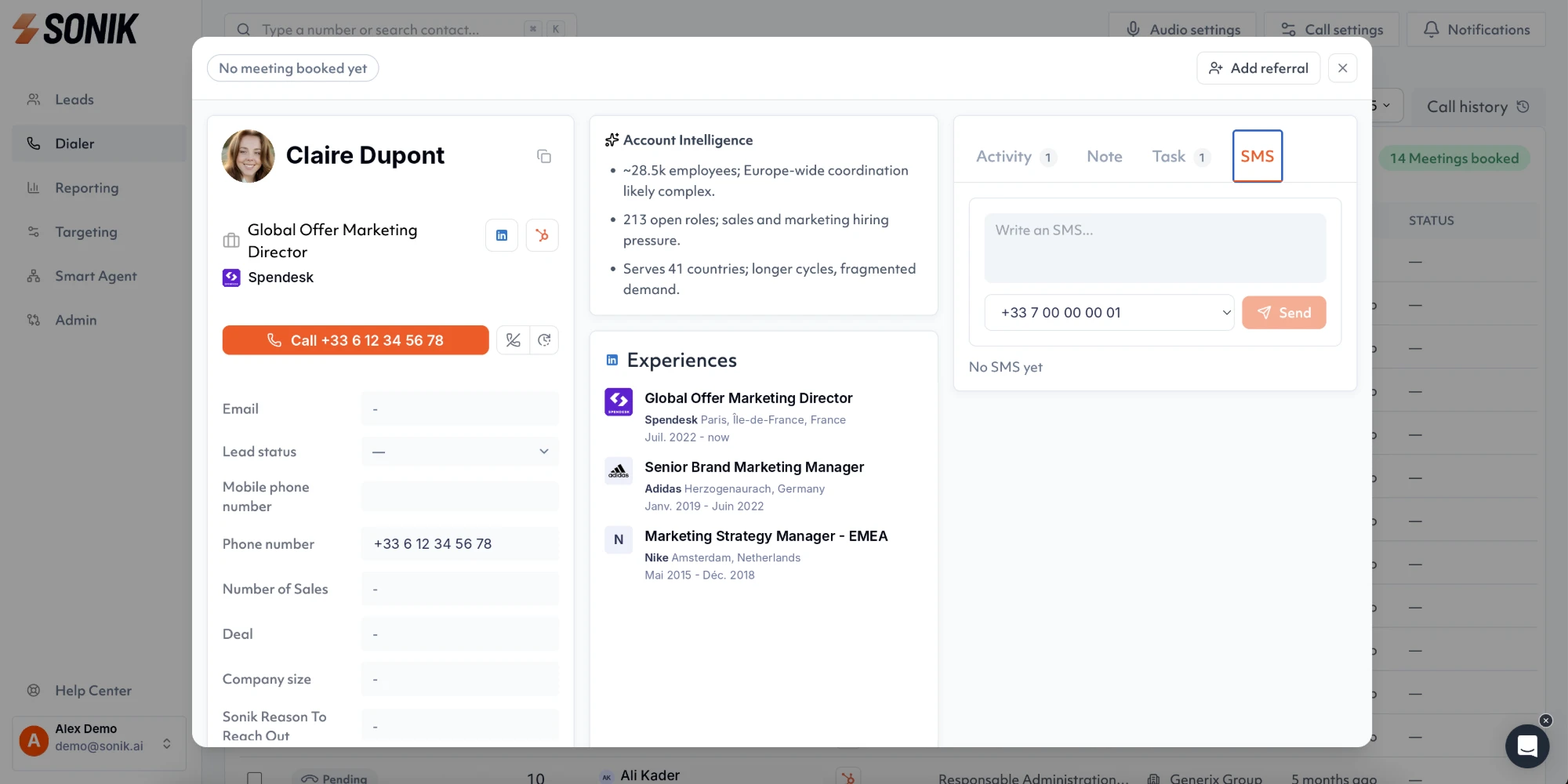
The parallel dialer handles tips 4, 12 and 13: persona-based call blocks, about five times more conversations, and attempt rotation. AI call prep writes the 60-second brief (tip 14) and the coaching layer flags the calls to review (tip 15).
What Sonik does not do is talk for you. Tips 2, 3 and 9 are yours.
Cold calling tips are only useful if you can measure them. The top five in our data are: open with a trigger, ask "What do you mean?", start questions with "how", call at the right slot for the persona, and call known contacts first. This week, pick tip 2 alone and use it on every objection you hear. Count the conversations that continue past it.

