Get started
Still unsure of the impact of Sonik?
See it for yourself and ask for your free trial


Account-based marketing means choosing a short list of accounts and running one coordinated plan on each, instead of treating every lead the same. The best examples for SDRs are not ad campaigns. They are small plans where a call, a signal and a piece of content land on the same account in the same week.
The core idea fits in one line: treat an account as the unit of work, not the lead. A rep chasing 400 leads sees 400 separate chances. A rep working 15 accounts sees 15 buying committees, each with its own timing and its own politics.
Most ABM content is written for marketers with ad budgets. An SDR needs something else: a list of 10 to 25 accounts, a reason to call each one, and a plan for reaching more than one person inside it.
Benoit, our founder, spent five years as an AE at Google Cloud. Accounts there came with a written plan, not a sequence. That is the mindset to borrow: fewer accounts, more thinking per account, and a phone call at the centre.
Pick ten accounts that match your ICP and have a live trigger, such as a new funding round, a new head of sales or a cluster of hiring posts. Map three roles per account: the person who runs the work, the person who influences the choice and the person who signs.
Then run three weeks:
A first-call line for the person who runs the work might be: "Congratulations on the new sales leader. Teams usually rework how they prospect in the first 90 days, so I wanted to ask how you are handling outbound right now." It names the trigger, stays short and asks a how question. Our benchmark shows that discovery questions starting with "how" lift conversion by 190%.
Measure meetings per account, not per contact. One meeting with any of the three counts as a win for that account.
Your CRM already holds a Tier 1 list: deals that fit and did not close. Filter for lost reasons that can expire, such as timing, budget or an incumbent contract, and check for a trigger since.
This plan works because the account knows you, and the contact is already in your CRM. Our benchmark shows that "How have you been?" to a known contact reaches about 10% success, against about 1.5% for a standard cold open. A comeback call starts from that advantage.
Take 30 to 50 accounts and watch them for website visits, as described in our guide on signals. When two people from one account visit within a week, the account enters a pod. The rep calls the best-fit persona the same day and a second persona within 48 hours. The marketing team sends nothing in between unless the rep asks.
This is ABM with a trigger built in. The list stays small because only accounts that show interest leave the watch list.
Start from your five best customers and find accounts that resemble them in size, sector, stack and growth stage. Ask the customer's champion, if the relationship allows, for a short note you can reference. A call that starts with "We work with a company a lot like yours in your sector" gets a different hearing from a pitch with no context.
Only name a customer when they have agreed to it.
None of these plans needs a new tool. They need a short list, a trigger and the discipline to call. In our experience, the common failure is a list that grows back to 300 accounts within a month. Cap Tier 1 and move accounts out when they have no trigger for 60 days.
ABM and volume are not enemies. Our north-star funnel is 20 conversations per day per SDR. Tier 1 accounts feed it with high-quality conversations, while the rest of the list feeds it with volume.
A last point on measurement. Count, per account, the number of conversations, the number of contacts reached and the next step agreed. A Tier 1 account with three conversations and no meeting still tells you something: either the trigger was weak or the committee is divided. Take that back to the weekly review and decide whether to keep the account or move it down.
We build the account list from the signals already in your CRM, then let those signals decide who rises in the queue. The dialer gives the rep the account history, the trigger and the other contacts in the account before the call.

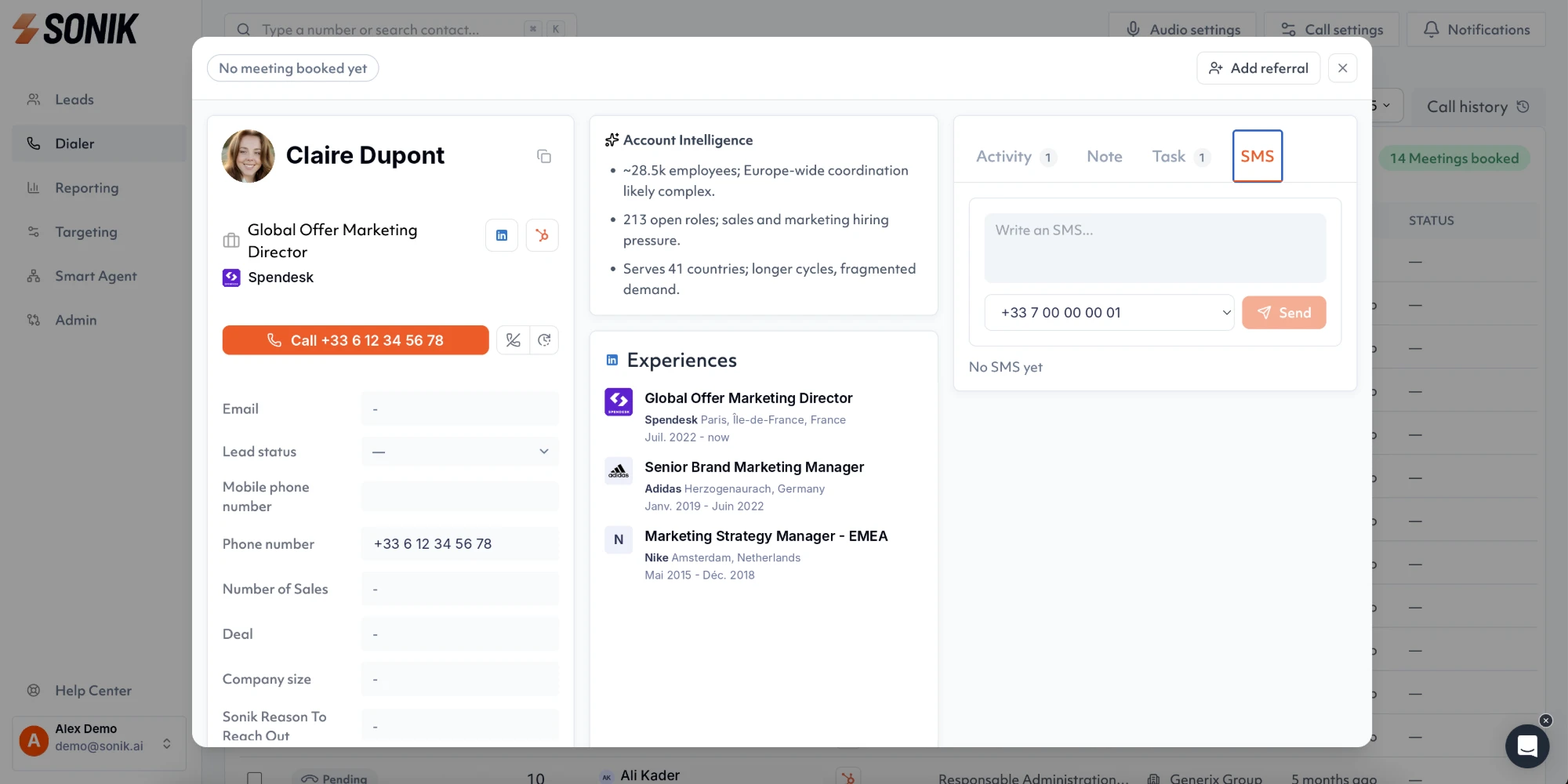
For Tier 1 accounts, the rep dials one by one and takes notes. For the lower tiers, parallel dialing gives reps about 5 times more conversations. The aim is 2 times more meetings from 5 times more conversations with the right contacts.
You do not need an ad budget to run ABM. This week, choose ten accounts from your CRM with a recent trigger, map three roles in each and book the first call for the person who runs the work. Next Friday, count how many accounts have a meeting or a named next step. That is your first account-level number.

