Get started
Still unsure of the impact of Sonik?
See it for yourself and ask for your free trial

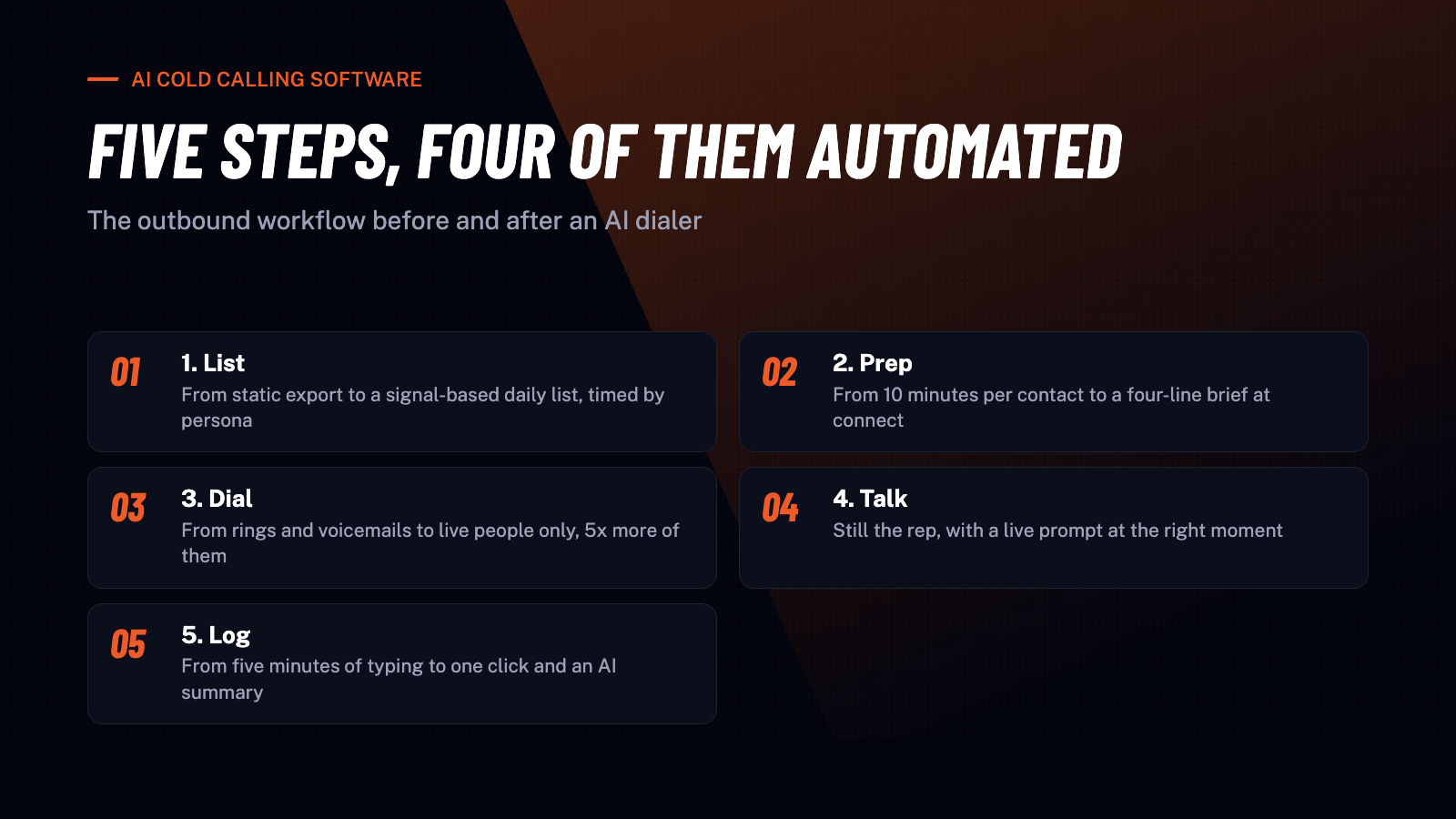
AI cold calling software changes four of the five steps of an outbound call and leaves the fifth, the conversation, to the rep: the list is built from signals instead of exports, the prep becomes a brief at connect, the dial becomes parallel so the rep only hears live people, and the logging becomes a click. The effect on pipeline comes from more conversations with a better first sentence, not from more dials. Here is the workflow step by step, the numbers that move, what to check before buying in Europe, and a 30-day rollout.
Take a rep on a classic dialer with a CRM and a spreadsheet. A cold call costs them, in our experience: a minute to pick the next contact, two to five minutes to read the account, a dial, six rings, a voicemail, thirty seconds to log "no answer". Repeat. At the average connect rate in our benchmark of 1,000,000 B2B cold calls in France, 11.3%, nine of those cycles produce no conversation, and the research spent on them is lost.
When someone does pick up, the opener was written in a hurry. 65% of reps open by explaining what they sell. The meeting rate for that opener is 2-3%, against 7-10% for an opener built on a trigger.
So the pre-AI workflow has two problems that compound: too few conversations, and unprepared ones. The software has to fix both or it fixes neither.
The software watches the CRM (dormant leads, closed-lost anniversaries, uncalled demo requests), the website (known accounts on the pricing page) and the market (job changes, hiring, social intent). Reps use only about 20% of the signals already in their CRM; half of Sonik's pipeline came from there. The output is a daily list with a trigger per contact, grouped by persona and assigned to the slot where that persona picks up: founders around 10am, marketing around 4pm, HR around 1pm.
Four lines per contact: CRM history, the trigger, the persona's likely pain, a suggested opener. Generated for the whole list before the block, read in ten seconds when the call connects. No more research on people who do not pick up.
Several numbers dialed at once, voicemails and dead numbers filtered, the first live person handed to the rep with the brief on screen. About 5x more conversations per hour in our data. This is the step that makes 20 conversations a day, our north star per SDR, a normal day rather than a record.
The rep talks. The software listens and prompts: the "how" question when the rep is about to pitch (discovery questions starting with "how" lift conversion by 190% in our data), "What do you mean?" when an objection lands (+197%). The prompts are short and rare. A screen full of advice is a screen the rep stops reading.
Transcript, summary, outcome, next step written to the CRM, follow-up email drafted from what was said. The rep confirms and the next call is already ringing.
Measure against the month before the rollout, per rep.
Dials per day will go up and means nothing on its own. Talk time per day goes up and means a little. If conversations rise and meetings do not, the list is wrong or the opener is still a pitch; the software cannot fix either from step 3 alone.
A buyer's checklist. Categories, not vendors.
Run a two-week pilot with two reps and a baseline. Ask for the pilot numbers in conversations and meetings, not in dials.
Week 1: two protected call blocks a day, 10am and 4pm, on the new dialer, with the existing list. Measure conversations only.
Week 2: switch the list to signals. Reps read the brief at connect. Measure the share of trigger openers; pull five recordings per rep on Friday.
Week 3: turn on live prompts, two at most. Coach one behaviour, the "how" question. Measure meetings per conversation.
Week 4: automated logging and follow-up emails on by default. Review the four numbers against the baseline with the team. In our experience adoption holds when reps see their own meeting count rise, and fails when the tool is introduced as a way to inspect them.
Sonik is the five-step workflow above in one product. Signals from the CRM, the website, job changes and social intent build each rep's daily list, timed by persona. AI call prep writes the brief. The parallel dialer runs the session and delivers live conversations only, about 5x more per hour than manual dialing. Live coaching prompts the "how" question and the "What do you mean?"; the call is logged to the CRM automatically.

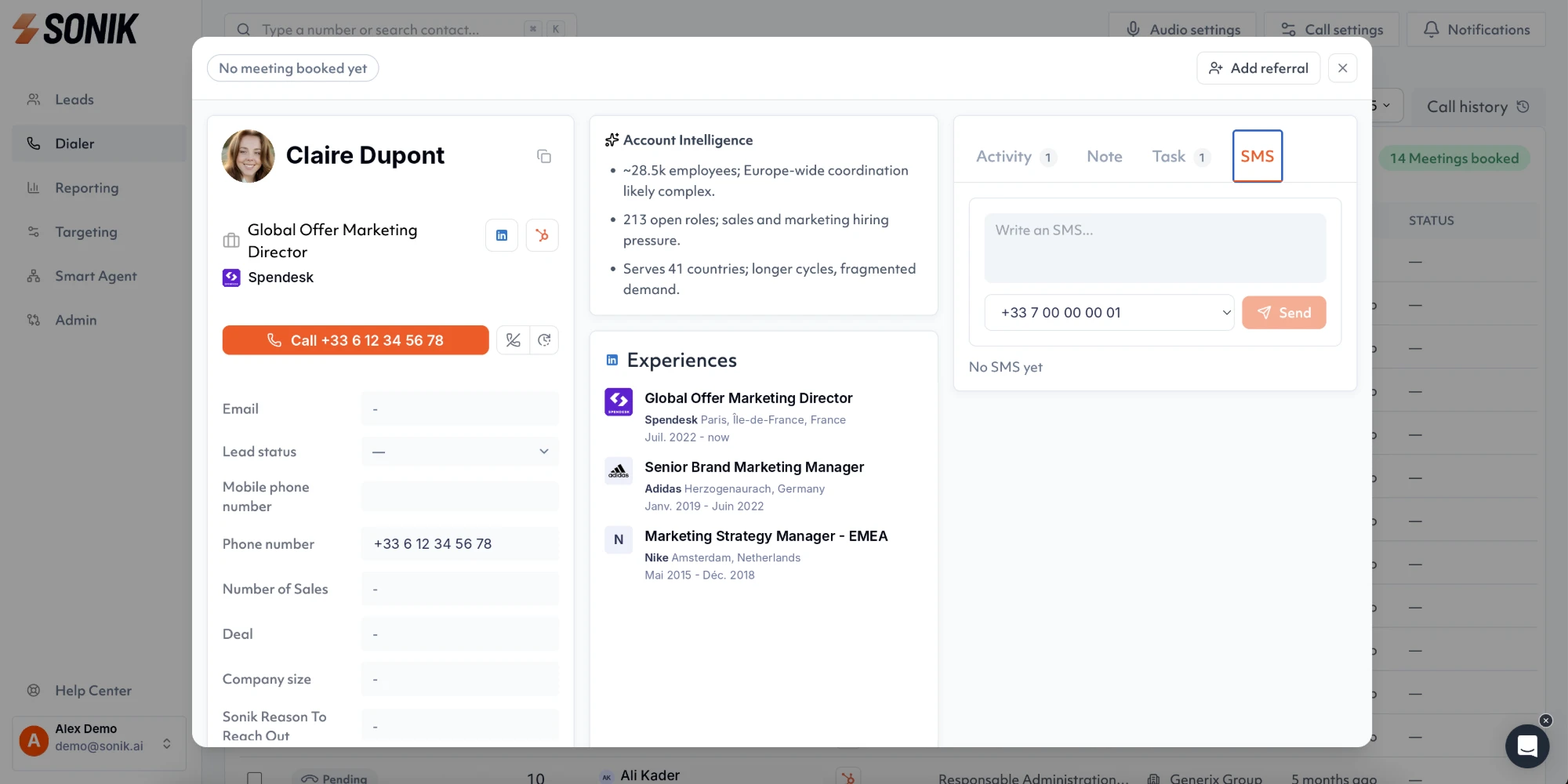
We built it for European teams first: French and European telephony, GDPR-compliant recording, and a benchmark of 1,000,000 real B2B cold calls in France behind the timing and the prompts. The target is 2x more meetings through 5x more conversations with the right contacts. Pricing is on sonik.ai/pricing.
AI cold calling software earns its place by changing four steps around the conversation and leaving the conversation to the rep. Judge it on conversations per day, trigger openers and meetings per conversation, never on dials. This week, write down those three numbers for your team as they are today. That baseline is the start of the business case, and the only honest way to read a pilot.

