Get started
Still unsure of the impact of Sonik?
See it for yourself and ask for your free trial


The best cold call opener does not explain what you sell. It explains why you are calling this person, today. In 1,000,000 B2B cold calls we analyzed with Katana, trigger-based openers booked a meeting 7 to 10% of the time. Pitch-first openers booked 2 to 3%. And 65% of reps still open with the pitch.
With Quentin Despas from Katana, we looked at what happens in the first 30 seconds of 1,000,000 cold calls made in France. 65% of reps make the same mistake: they explain what they sell before explaining why they are calling.
It sounds like this:
None of these is wrong. They are just useless to the person on the other end. The prospect does not know why any of this matters to them, so the brain files the call under "interruption" and looks for the exit.
So we looked at the calls that actually turned into meetings. They started differently:
The structure is always the same: Trigger, then Problem, then Discovery, then Value. Not Pitch, then hope they care.
The difference in outcome is massive:
That is 3 to 4x more meetings from changing what happens in the first 30 seconds. Same list, same product, same rep.
Every prospect who picks up has one question in their head: "Why are you calling me, right now?"
A pitch answers a different question, "what do you do?", that nobody asked. A trigger answers the real one. It proves in one sentence that this call is about them, not about you.
Once you have earned that relevance, you can sell. Before that, you are just another interruption. This is what changed the way I think about cold calling: the opener is not there to explain the company. It is there to buy the next 30 seconds.
Put together, for an SDR hiring trigger: "Hi Marie, Benoit from Sonik. I saw you're hiring 3 SDRs. Usually the hard part is not the hiring, it is getting each of them to 20 conversations a day. How are you planning the ramp?"
The trigger has to match the person, not just the account. For a founder: a funding round, a new office, a first sales hire. For a marketing leader: a website relaunch, a new campaign, a new market. For HR: open roles, a new office, a hiring freeze that just lifted. For a sales leader: the hiring of SDRs, a new territory, a closed-lost deal from last year that is now worth reopening.
Same account, four personas, four different openers. That is why the trigger has to come from your CRM and your signals, not from a generic research sheet.
At Sonik, the trigger is shown on the call screen before the rep speaks. The signals layer reads the CRM and public sources for hiring, job changes, website visits, closed-lost history and social intent, and attaches them to the contact.
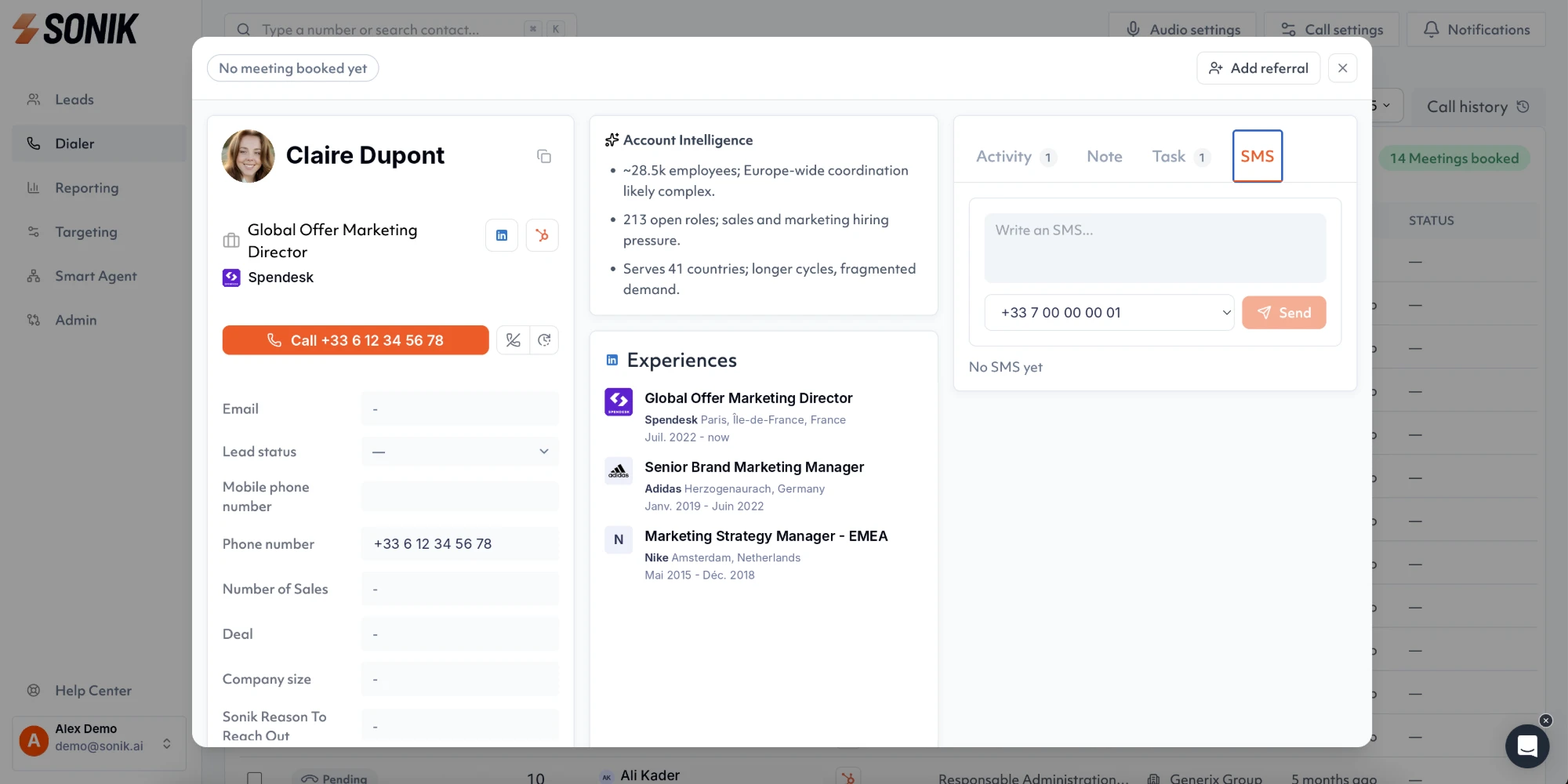
The AI call prep turns those signals into a one-line context, so the rep opens with "I saw you're hiring 3 SDRs" without having opened a single tab. The parallel dialer then makes sure there are enough conversations for the opener to matter.
The full analysis of the 1,000,000 calls with Katana is on YouTube, with what gets prospects to pick up, stay on the line and book a meeting.
65% of reps open a cold call with what they sell, and book 2 to 3% meetings. Reps who open with a trigger book 7 to 10%. The opener is not supposed to explain your company; it answers "why are you calling me, right now?". This week, pull your last 10 recorded calls, count how many open with a pitch, and rewrite those openers around one trigger from the CRM.

